

A chromatic harmonica plays all twelve semitones, which means any melody in any key - and that is what sets it apart from the diatonic blues harp. A small slide on the side of the instrument makes it possible. For jazz, classical, film melodies or simply clean melodic playing across the full range, the chromatic harmonica is the instrument to reach for.
This guide explains how the slide works, what 12 versus 16 holes mean in practice, why almost every instrument is tuned to C major - and which model suits which player.
01The slide - how all 12 semitones appear
The heart of every chromatic harmonica is the slide on the right-hand side. At rest you play the notes of the base tuning, usually C major. Press the slide in and it raises every blown and drawn note by a semitone - C becomes C sharp, G becomes G sharp.
That gives four notes per hole: blow, draw, blow with slide, draw with slide. Across the full row of holes you get all twelve semitones of an octave. A single chromatic in C can therefore be played in every key - you do not need a separate instrument for each key.
02Chromatic vs diatonic - the difference from the blues harp
The familiar diatonic harmonica - the blues harp - has only the notes of one scale and no slide. It is compact, affordable and ideal for blues, folk and rock, but it does not readily play every semitone. To play chromatically there you have to use bending techniques, which take practice.
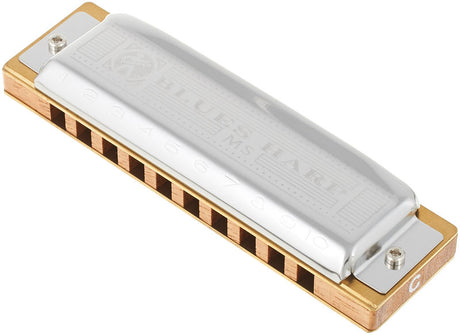
The chromatic flips that: it delivers the full range directly through the slide, at the cost of a larger, heavier and pricier instrument. If you are just starting out and want to play blues, the diatonic is the natural entry point - one reference model is the Hohner Blues Harp MS – diatonische Mundharmonika in Richter-Stimmung mit Doussié-Holzkanzelle (10 Kanäle, 3 Oktaven). If your goal is melodic playing across all keys, the chromatic is the right choice.

0312 or 16 holes - how much range do you need
Chromatic harmonicas come mainly in two sizes. The 12-hole instrument has 48 reeds and covers three full octaves from middle C - enough for the vast majority of pieces and easier to handle. The 16-hole instrument has 64 reeds and four octaves; it reaches two octaves lower and is the choice for jazz soloists and demanding classical players who need the extended bass range.
For beginners the recommendation is clear: start with 12 holes and step up later when the lower range is genuinely needed. The 16-hole model is larger and asks for more breath control.
| Feature | 12 holes | 16 holes |
|---|---|---|
| Reeds | 48 | 64 |
| Range | 3 octaves from middle C | 4 octaves |
| Suited for | starting out, pop, melody | jazz solo, classical, full bass |
| Handling | more compact, lighter | larger, more breath needed |
04Tuning - why almost always C major
The standard base tuning of the chromatic harmonica is C major. This is no accident: because the slide extends every note chromatically, a C chromatic can be played in every key. C is also the tuning that almost all method books and sheet music are written for. Other base tunings exist, but they are special cases - for getting started and for 95 percent of the repertoire, C is the right choice.
05Which chromatic harmonica to buy - four models
The four models below form a sensible ladder from entry level to professional instrument - all in the base tuning of C.
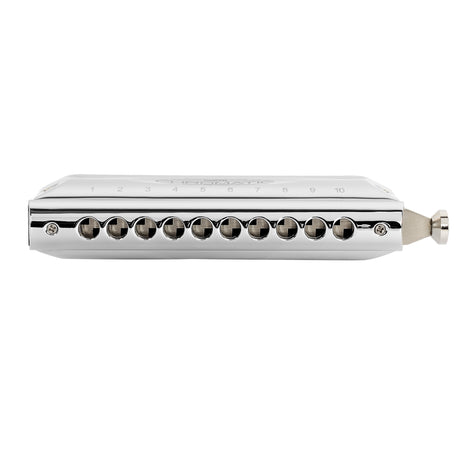
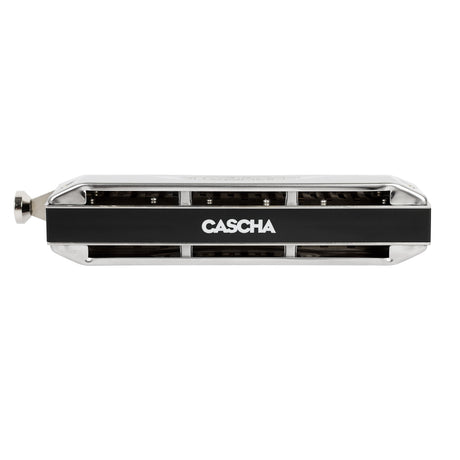
The Cascha HH2272 Chromatic 10-40 Blues – chromatische Mundharmonika mit Schieber (10 Löcher, 40 Töne, 2½ Oktaven, inkl. Soft-Case) is the compact entry: 10 holes and 40 notes across two and a half octaves, plastic comb - a straightforward way into chromatic playing. The Hohner Super Chromonica 270/48 – chromatische Mundharmonika mit Schiebeventil (12 Kanäle, 48 Stimmzungen, 3 Oktaven, Birnbaumholz) is the classic - 12 holes, pearwood comb, the standard everything else is measured against. If you need more range, the Hohner Chromonica 280/64 C – chromatische Mundharmonika mit Schieber, 16 Kanäle & 4 Oktaven (inkl. Hartschalenetui) offers 16 holes and four octaves. At the top sits the Hohner New Super 64 C – chromatische Mundharmonika mit 16 Kanzellen, 4 Oktaven & SilentSlide-Schieber - the 16-hole professional instrument for stage and studio. Alongside Hohner and Cascha we also carry Seydel models; find the full range in the Mundharmonikas.


The choice follows your playing goal: if you want to play melodies across all keys - jazz, classical, film music - the chromatic harmonica is the instrument. A 12-hole model in C is plenty to start; you step up to 16 holes when you find yourself missing the lower range.
Frequently asked questions
What is the difference between a chromatic and a diatonic harmonica?
How does the slide work?
12 or 16 holes - which should I buy?
Which key should I buy?
Is a chromatic harmonica suitable for beginners?
Find your chromatic harmonica
From the entry model to the 16-hole professional instrument - all chromatic harmonicas and the matching accessories at a glance.
See all harmonicasThe classic: Super Chromonica 270Passende Produkte


Hohner New Super 64 in C – chromatic harmonica with 16 holes, 4 octaves & SilentSlide slider