

A grand piano at home is, for many, a dream that founders on two things: space and price. Space deserves a second look. Compact baby and parlour grands start at around 150 cm in length and therefore fit far more living rooms than the large concert and parlour grands you picture from the stage.
In this buying guide we cover how much floor space a compact grand really needs, which models are available up to around 170 cm, how a baby grand differs in sound from an upright and for whom the step from upright to grand is worthwhile.
01How much space does a grand piano need in a living room
Unlike an upright, what matters for a grand is not the height but the footprint on the floor. A compact grand stands on its three legs on a footprint of roughly 150 by 150 cm. Add the space for the piano bench and room to sit down.
As a rule of thumb, a clear area of about two by two metres is enough to set up a baby grand and play comfortably. The lid opens upward rather than to the side, so no extra room is needed above the instrument. More important than square metres alone is the room acoustic: a grand projects its sound downward and to the sides. In a heavily damped room with a thick carpet, heavy curtains and lots of upholstery it sounds more muted; in a live room with hard floors, more present. A moderately furnished living space is the good middle ground for most.
02The compact models up to 170 cm
Four models cover the compact segment up to around 170 cm well. They differ mainly in length, and length largely determines how full and resonant the bass is. The longer the bass strings, the fuller the tone.
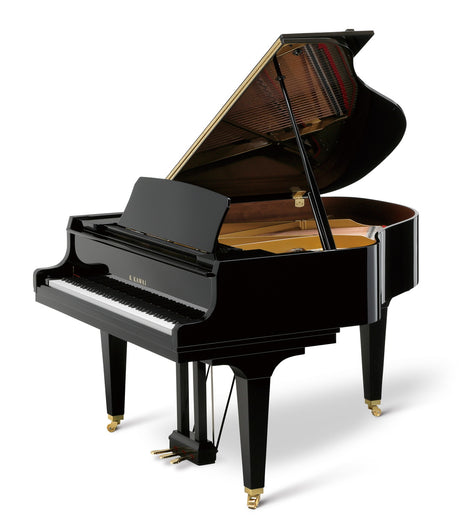
The Yamaha GB1 K Flügel is the most compact of the group at around 151 cm and the natural entry point when space is tight. The Kawai Flügel GL-10 - schwarz poliert is very close at around 153 cm and brings Kawai's warmer tonal character. With a few more centimetres of footprint, the Yamaha GC1 Flügel - schwarz poliert (around 161 cm) and the Kawai Flügel GL-30 (around 166 cm) gain noticeably in bass foundation and sound volume. All four stay under 170 cm and within the living-room-friendly range.


| Model | Length (approx.) | Footprint (approx.) | Character |
|---|---|---|---|
| Yamaha GB1 K | 151 cm | 150 by 150 cm | most compact entry, clear and direct |
| Kawai GL-10 | 153 cm | 150 by 152 cm | warm tone, very compact |
| Yamaha GC1 | 161 cm | 150 by 161 cm | more bass foundation, balanced |
| Kawai GL-30 | 166 cm | 150 by 166 cm | fuller volume, parlour-grand maturity |
03Baby grand or upright: the difference in sound and touch
A compact baby grand and a good upright are often close in price. So why choose the grand over the more space-saving upright. The difference lies in the action and the sound.
In a grand, the hammer action is horizontal. After a key strike the hammers fall back under their own weight, so the same note can be repeated faster and with more control. This repetition is what makes demanding pieces noticeably easier to play. In an upright the action is vertical and relies on springs. In terms of sound, the grand radiates freely into the room through its open lid, while the upright sends the tone toward the wall behind it. There is also the look: in a living space a grand is a piece of furniture with presence, not an instrument that disappears against a wall. For many, that is precisely the reason for the grand.
04The silent option for an apartment
Anyone living in a multi-family building or wanting to play late at night need not give up the grand. Both makers offer their compact models with a silent system. A mechanism stops the hammers just short of the strings, an optical sensor picks up the key strike and delivers the sound through headphones. The feel of the real grand action is preserved.
Yamaha calls the system SH3 or Silent, Kawai calls it ATX4. Concretely available are, for example, the Yamaha GC1 Flügel - schwarz poliert mit SH3 Silent System and the Kawai Flügel GL-10 schwarz poliert mit ATX4 Silent System. This lets you play acoustically by day across the full soundboard and practise silently through headphones in the evening, without disturbing the neighbours.
05Who a compact grand suits
A compact grand is the right choice when three things come together: enough floor space of about two by two metres, the wish for the genuine grand action and a living space where the instrument may also stand as a piece of furniture.
For advanced players who reach the limits of an upright, the faster repetition of the grand action is the decisive gain. For families investing for many years, the compact grand is a long-horizon purchase with stable resale value. Anyone who has the space and values the sound of a grand will find, among the models up to 170 cm, the realistic entry point. The full overview is in our Flügel selection.
A grand piano at home is, with the compact models up to 170 cm, more realistic than the first thought suggests. With about two by two metres of clear space you can choose between the compact entry from 151 cm and the more resonant parlour grand up to 166 cm. The next step is to compare the models at leisure and relate the length to your own room.
Frequently asked questions
How much space does a grand piano need at home at minimum?
What is the smallest grand piano that still sounds good?
Is a baby grand worth it compared with an upright?
Can I play a grand quietly in an apartment?
Discover compact grand pianos for the living room
Compare the baby and parlour grands up to 170 cm and find the model that fits your room.
View all grand pianosView the Yamaha GB1 KPassende Produkte
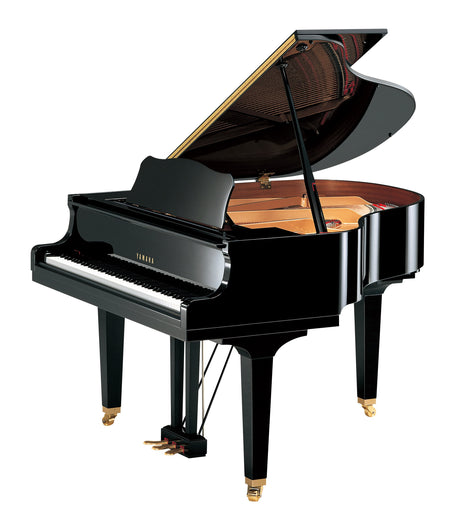

Yamaha GB1 grand piano black polish – 146 cm, Balanced Action mechanism, V-Pro cast iron frame
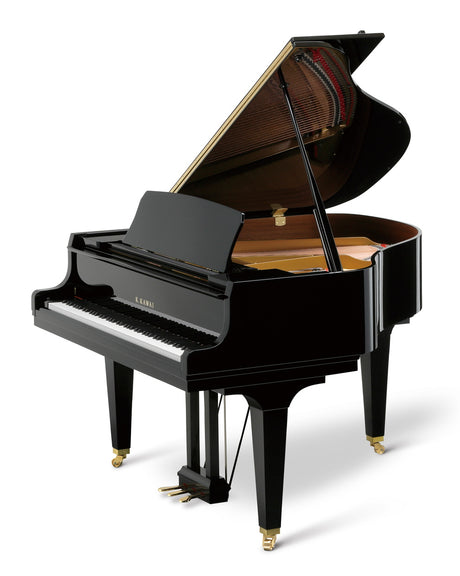

Kawai GL-10 grand piano black polish – 153 cm, Millennium III action, solid spruce soundboard
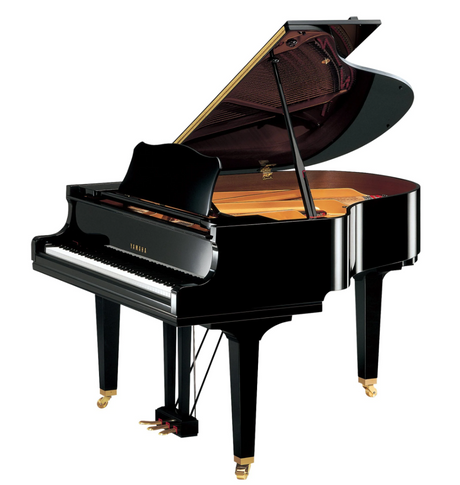
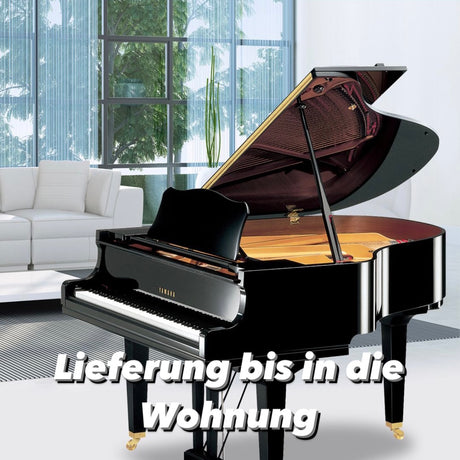
Yamaha GC1 grand piano black polish – 161 cm, Balanced Action mechanism, from the Classic Collection
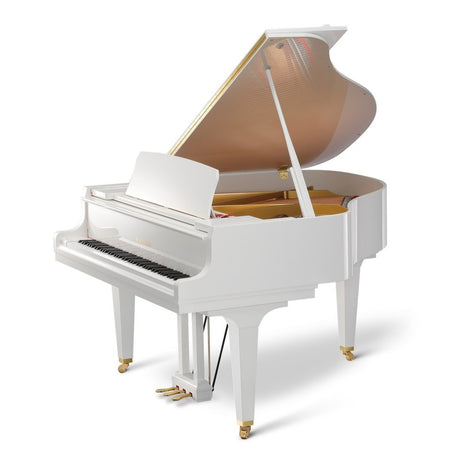
Kawai GL-30 grand piano – 166 cm, Millennium III action, solid spruce soundboard