

Dull tone, hard to tune, maybe a broken string: it is time for a fresh set. Changing guitar strings takes about half an hour of calm work and is well within reach for beginners. This guide walks you through it step by step and covers both bridge systems, because that is exactly where steel-string and classical guitars differ.
The key difference first: a steel-string (acoustic) guitar uses steel strings with a small ball at the end (ball-end), held at the bridge with bridge pins. A classical guitar uses nylon strings without a ball, tied at a tie-block bridge. Which string belongs on which guitar and which gauge to pick is covered in detail by our string-choice guides. Here we focus on clean installation.
01Tools and Preparation
You do not need much. A string winder noticeably speeds up winding and unwinding at the tuner, a wire cutter trims the ends cleanly, and a tuner is essential. On a steel-string, a small bridge-pin puller helps if the pins are tight, and the notch built into many string winders works in a pinch.
Change the strings one at a time, not all at once. That keeps the pull on neck and bridge even, the neck does not shift, and you do not lose track of the order. Lay out the right set and a soft cloth.


02Removing the Old Strings
First relax the string you want to swap by turning the tuner until the string hangs loose. A still-tensioned string can snap back when released, and this avoids it. Then unwind the string from the tuner.
On a steel-string, pull the bridge pin straight up and lift the ball-end string out of the hole. On a classical, undo the knot at the bridge and pull the nylon string out. Since you work one string at a time, only one position is ever open and the rest of the guitar stays under tension. With the neck clear, take a moment to wipe the fretboard and bridge with a dry cloth.
03Steel-String: Seating the String with a Bridge Pin
Take the new steel string and drop the ball end first into the bridge hole. Reinsert the bridge pin with its slot facing the string and press it firmly down. At the same time pull the string slightly up until the ball seats against the bridge plate from the inside and locks under the pin. If the pin is not seated firmly, it pops out later under tension.
Run the string taut to the matching tuner. Leave about one tuner-post width of slack so you have enough string for three to four clean winds before you start winding.

04Classical: Tying the String at the Bridge
Nylon strings have no ball end, they are tied at the tie-block bridge. Pass the string end from the front through the hole in the bridge so a short piece sticks out the back. Fold that end back over the bridge edge toward the front and pass it under itself once or twice to form a loop.
For the thin, smooth treble strings (G, B, E) make two or three wraps instead, so the knot does not slip under tension. Pull the knot tight before adding tension, it should sit behind the bridge edge. Then run the string to the tuner.

05Winding Cleanly at the Tuner
Pass the free end through the hole in the tuner post and hold a little slack. Wind the turns so they lay neatly side by side from top to bottom on the post, not crossing over. Clean, tight turns are the key to tuning stability, while loose or crossed turns slip and keep knocking the guitar out of tune.
Three to four winds are enough. Bring the string slowly up to roughly pitch with the string winder and trim the excess end with the wire cutter, leaving a few millimeters.
06Breaking In and Retuning
New strings stretch and go flat at first, which is normal, not a fault. Tune the guitar, then gently pull each string a few millimeters off the fretboard to take up the stretch, and tune again. Repeat a few times.
Worth knowing: nylon strings take much longer than steel to settle. A steel-string is often stable after a few hours of playing, while a freshly strung classical can keep giving for several days, up to a week. Just retune more often during that period, after which the tuning holds.
A string change becomes routine once you have done it. With the right set, a clean seat at the bridge and tidy winds at the tuner, your guitar sounds fresh again. With a classical, just plan a little more patience during break-in.
Frequently asked questions
Should I remove all the strings at once?
Why does my bridge pin keep popping out?
How many winds should I make at the tuner?
Why does my classical hold tune so poorly after a change?
Which strings and gauge fit my guitar?
Find the Right Set
From phosphor bronze for the steel-string to nylon for the classical, our category has the right set for you.
All Guitar StringsD'Addario Steel-String SetPassende Produkte

D'Addario Strings for Acoustic Guitar, Phosphor Bronze - 10/47
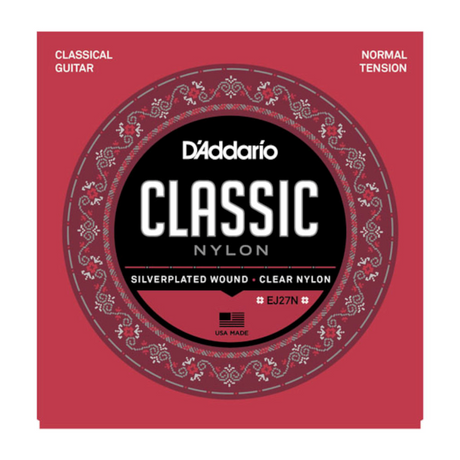
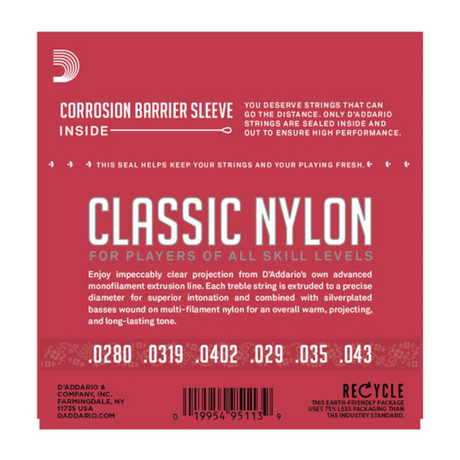
D‘Addario Classic Nylon EJ27N Student Strings for Classical Guitar, Nylon, Normal Tension
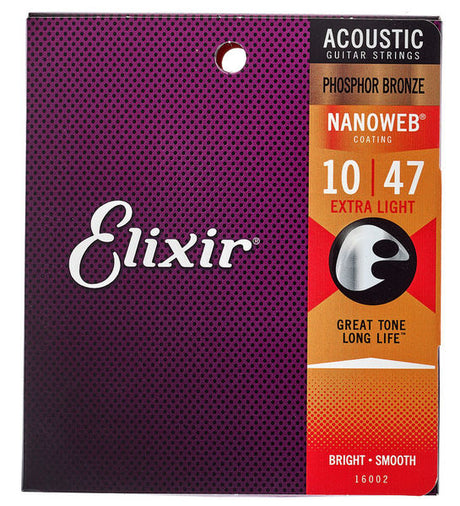
Elixir Nanoweb Phosphor Bronze Acoustic Guitar Strings - 10/47

Hannabach Classical Guitar Strings Series 500 Medium Tension