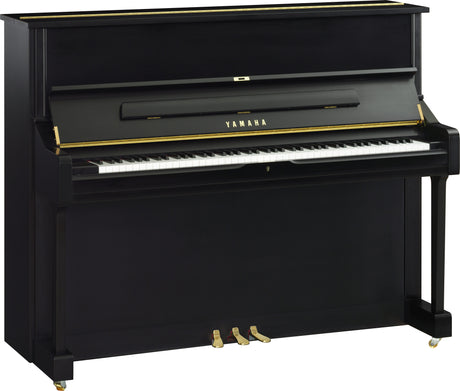
A piano for a beginner should fit everyday life at home. Parents may be choosing for a child’s lessons, while adults often want to start on their own. In both cases, room, practice times and playing feel matter. There is no blanket rule that every beginner needs an acoustic or digital instrument. Start with the real requirements, then compare suitable options.
01Who will play, and how will practice fit at home?
For a child, ask the teacher what the lessons actually require from the keyboard or its features. That is a useful check, not a universal rule that dictates one instrument type. Adult beginners can consider whether they will practise at set times or need more flexibility. In a shared home, quiet practice in the evening may also matter.
Before comparing models, write down the available space, usual practice times and preferred playing feel. Measure the position as well as the route into the room. This simple preparation keeps the choice from being driven by age or a single product feature.
02Digital piano: flexible volume and headphone practice
A digital piano generates its sound electronically. Depending on the model, it can be played through speakers or headphones, and its volume can be adjusted. This is useful when practice needs to fit around family routines or when a room cannot accommodate a heavy acoustic instrument. Consider the keyboard, pedals and controls in relation to the intended lessons.
The Yamaha CLP-835 is one specific example: Yamaha lists 88 keys and a GrandTouch-S keyboard. Those details describe its equipment, but they cannot tell you on their own whether its feel will suit a particular player. For a child, also consider the teacher’s requirements and ease of use. An adult may place more weight on headphones and keyboard response.
03Acoustic piano: real strings and a mechanical action
On an acoustic piano, a key operates a mechanism that makes a hammer strike a string. The instrument produces sound in the room without speakers. If you want that string sound and direct action, an acoustic model may suit you. It does need a fixed place, and you cannot turn down its room sound with a control. Acoustic pianos also need tuning and care; frequency and cost depend on the instrument and its surroundings.
Yamaha’s current B Series includes the B10, B20 and B30. Yamaha lists their heights as 110, 116 and 121 cm. These measurable differences do not predict learning quality or a particular sound result. Beginners can compare a B10 with a Kawai K-200, then check dimensions, action and exact equipment. Silent systems are specific versions and are not fitted to every model.
04Choosing for families and adult beginners
For children and families, consider lesson requirements, practice times and available space together. An acoustic piano is not a universal requirement for learning. A digital piano may work well when headphones and adjustable volume matter; an acoustic piano may work when the room and schedule suit the sound of strings.
Adult beginners should consider which type they will actually enjoy using at home. Someone returning to piano can take previous playing habits into account without assuming those habits demand a particular model. Do not choose by age or an assumed skill level alone. Compare specific instruments using the same questions and, when lessons are involved, ask the teacher to clarify what is needed.
05A simple decision before you buy
If quiet practice and flexible volume are top priorities, start with digital pianos. If you want strings and an acoustic action and have a suitable place for the instrument, explore acoustic pianos. If you are unsure, first identify the functions you will really use, such as headphones or a particular keyboard feel.
The Yamaha B10 and Kawai K-200 are two concrete acoustic options with different dimensions and features. Check the full version and the space it needs; height or brand alone does not establish a ranking. The new upright piano collection can help narrow the range, while digital models have a separate collection.
A good starting instrument fits both the room and the way you plan to practise. Use those conditions to compare specific models.
Frequently asked questions
Does a child need an acoustic piano for lessons?
Is a digital piano suitable for an adult beginner?
How does a digital piano differ from an acoustic piano?
What should I check first when choosing a beginner piano?
Compare instruments for beginners
Explore acoustic pianos and a digital piano as concrete options. Compare their features and footprint against your needs.
View Yamaha B10View Yamaha CLP-835Browse new upright pianosPassende Produkte