

Choosing a first guitar starts with its construction: classical guitars are designed for nylon strings, while steel-string acoustics are built for steel strings. The two families feel and sound different. Which one suits you depends on the music you want to play and how the neck and body feel in your hands. This guide lays out the main choices and examples from the current range.
01Nylon or steel: choose the guitar family first
Classical guitars use nylon strings; steel-string acoustic guitars are built for steel strings. This is a construction difference, not simply a matter of taste. Yamaha explains that the classical guitar has a wider neck and more space between strings to account for the way nylon strings vibrate. If you are interested in classical pieces, flamenco or individual fingerstyle notes, a classical guitar is a natural place to start. For pop, folk and chord-based accompaniment in the familiar acoustic format, a steel-string guitar may fit. These are musical pointers, not strict limits: different styles can be played on more than one kind of guitar. Do not swap string types without checking the instrument’s construction and maker guidance. Nylon strings do not automatically turn a steel-string guitar into a classical guitar.
02Consider your music and playing feel together
Think about the music that draws you to guitar and the playing approach you want to explore first. The wider neck of a classical guitar is a design feature to consider for individual notes and some classical techniques; the steel-string acoustic format may suit many chord-based styles. That does not mean either family is limited to one genre. Your fretting hand, arm reach and the body’s position are part of the choice too. Manufacturers provide dimensions and construction details, but they cannot predict which instrument will feel most comfortable to you. Compare nut width, scale length and body shape on exact models instead of choosing only because a listing says “beginner.” Write down two or three priorities: the music you have in mind, the string family and a format you can hold comfortably. This turns a broad question into a manageable shortlist.
03Size and scale length: choose for fit, not age
A full-size 4/4 guitar is not automatically right for every adult or older child, and smaller sizes are not only for children. Scale length is the vibrating length of the strings; together with body size and neck width, it affects reach and how the instrument sits against you. La Mancha offers its Rubi CM in several scale lengths and advises considering hand and arm length as well as height. When comparing a 3/4 guitar, do not rely only on an age chart. Check whether you can reach the first frets and hold the body comfortably. The La Mancha Rubi CM/59 is one example of a smaller classical guitar; the maker lists a 590 mm scale. Treat size as a guide, not a guarantee of fit for every player.
04Compare materials and included features
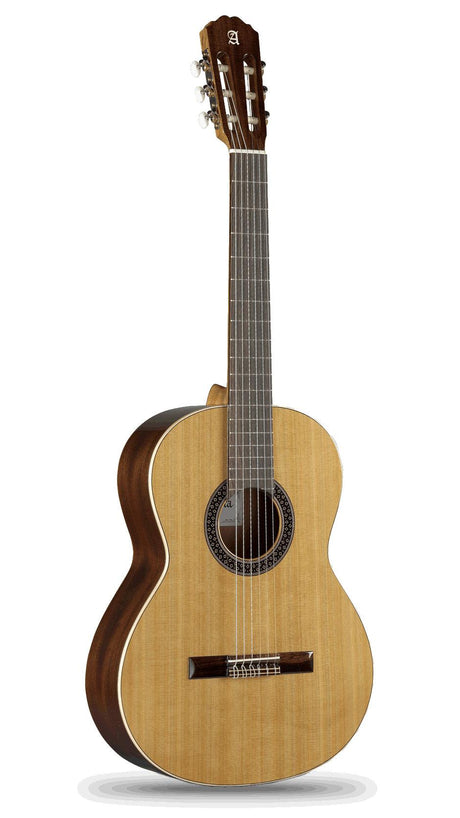
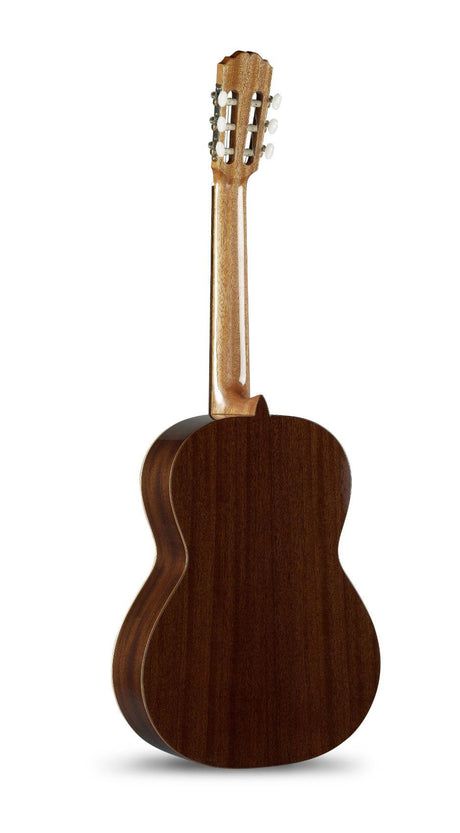
Classical guitars come with different top woods, body materials and equipment levels. A solid top is a specific construction detail, but it is not enough by itself to judge sound, build quality or personal suitability. Compare the full construction, scale, neck and included accessories. Alhambra lists a solid cedar top and sapelli back and sides for the 1C HT. Yamaha’s F310 is a dreadnought steel-string acoustic with a spruce top and a 634 mm scale. These are two different guitar families and examples for comparison, not a ranking. Check whether a bag is included and which strings come fitted from the factory. Full product specifications help more than a model name alone because versions can differ.
05Three current examples for different priorities
The Alhambra 1C HT is a full-size classical guitar with a solid cedar top and sapelli body, an example in the nylon-string family. Yamaha’s F310 is a dreadnought steel-string acoustic with a spruce top; Yamaha describes its scale as slightly shorter than that of some other acoustic guitars. For a more compact format, the La Mancha Rubi CM/59 is a 3/4 classical option with a 590 mm scale. Selection criteria differ by string family, music and size. No model is automatically best for every beginner. Read the product details, then use the category links below to browse other options.
06Match your first practice steps to the guitar
Once you have chosen a guitar family, keep the start simple: tune the instrument, find a comfortable sitting or playing position and sound the strings one at a time. Then try a basic chord and check that each string rings clearly. Practise moving slowly between two shapes before adding a rhythm. If you want to play melodies, look for individual notes on the fretboard; if you want to accompany songs, connect chord changes with a steady strum. A method or lesson can provide a sequence, but no particular learning speed can be promised. If the instrument is hard to hold or fret, first check its size and your position rather than deciding that guitar is not for you. The instrument choice should support the way you want to learn.
Start by choosing between a classical guitar with nylon strings and a steel-string acoustic. Then use your music, fit, scale length and preferred features to narrow the options. Compare real models without declaring a universal winner from one material or size label.
Frequently asked questions
Which is better for a beginner: classical or steel-string acoustic?
Can I put steel strings on a classical guitar?
What guitar size do I need?
Is a solid top always better?
Compare classical and steel-string guitars
Review the current models and compare their materials and dimensions.
All classical guitarsAll steel-string acousticsAlhambra 1C classical guitarYamaha F310 acoustic guitarPassende Produkte


Yamaha F310 acoustic guitar natural – Dreadnought body, spruce top, meranti back and sides


La Mancha Rubi CM/59 Classical Guitar Solid Cedar 3/4