Yamaha P-S500 or P-525 — both sit in the same price class, both share the same sound core, and yet they target two different types of player. One is a smart piano that guides you while you learn. The other is an upmarket portable instrument for advanced players who want, above all, a convincing playing feel.
Place the keybed, the sound engine and the learning features side by side and it quickly becomes clear which model fits your own practice. This comparison breaks the decision down step by step.

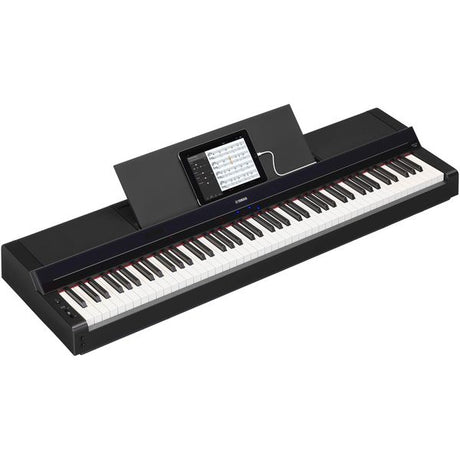
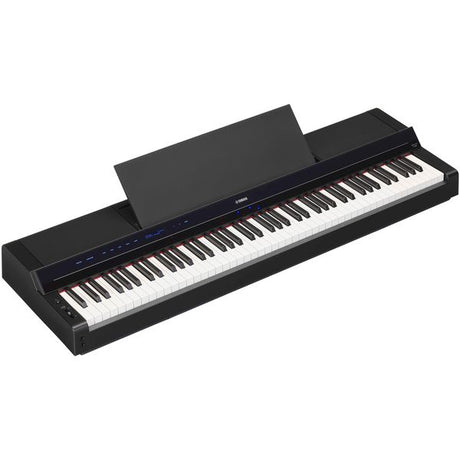
The smart piano for learning
Ideal for: Beginners and returning players who want to practise with app guidance and key lighting.
See all Digitalpianos →
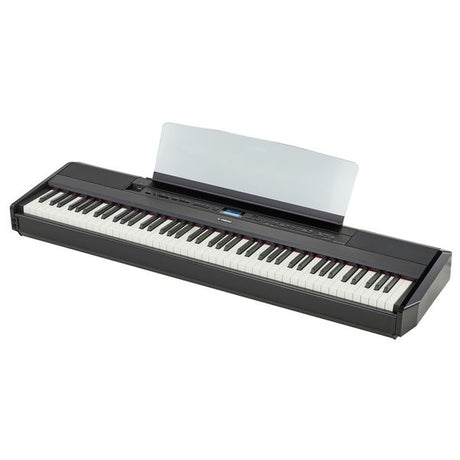
The upmarket portable instrument
Ideal for: Advanced and ambitious players who value the keybed and stage suitability.
See all Stage Pianos →01The keybed — GHS versus GrandTouch-S
This is the clearest difference. The Yamaha Stagepiano P-S500 uses the GHS action (Graded Hammer Standard): solid, evenly weighted, light and easy to transport. For learners and occasional players it is a pleasant, uncomplicated foundation.
The Yamaha Stage Piano P525, by contrast, relies on the GrandTouch-S action with partly wooden keys and escapement simulation. The playing feel sits noticeably closer to an acoustic grand — anyone who phrases with nuance and meters dynamics finely will notice the difference within the first minute.


02Sound — same core, different output
Both models draw on the same high-quality sources: the Yamaha CFX concert grand and the Bösendorfer Imperial. The underlying sound is first-rate in either case.
Both share the same sound engine, so the character is virtually identical. On the speaker system the P-S500 actually carries slightly more power, at around 52 watts, than the P-525 at around 40 watts — both play with plenty of body and balance at home. The difference between the two models therefore lies not in loudness, but in the keybed, sound detail and orientation.
03Learning and smart features versus performance
The P-S500 is designed as a smart piano. It offers key lighting above the keys and full integration with the Smart Pianist app — pieces are guided visually step by step, alongside auto-accompaniment and a wide variety of sounds. That noticeably lowers the barrier to entry.
The P-525 forgoes this learning assistance and focuses on pure playing: clean controls, high-quality connections and a sound concept that does not hold advanced players back. If you are looking for an instrument to grow with rather than a learning companion, this is the right one.
04Direct comparison at a glance
The key specifications of both models side by side. The prices are close — the decision comes down to ambition and intended use, not budget.
| Feature | P-S500 | P-525 |
|---|---|---|
| Keybed | GHS, light and even | GrandTouch-S, partly wood |
| Sound engine | CFX and Bösendorfer Imperial | CFX and Bösendorfer Imperial |
| Learning aids | key lighting, Smart Pianist app | focused on pure playing |
| Speakers | around 52 watts | around 40 watts |
| Ideal for | beginners, learners | advanced, performers |
At its heart the choice is between two paths. If you are still learning, want accompaniment and like to practise with an app and key lighting, the P-S500 serves you excellently. If you already play and are looking above all for a convincing keybed and sound experience that also holds up on stage, reach for the P-525. Both come from the same portable Yamaha family and share the same high-quality sound core.
Frequently asked questions
Which Yamaha piano is better for beginners?
Do the P-S500 and P-525 have the same sound?
How does the keybed differ?
Is either suited to the stage?
Is the step up to the P-525 worth it?
Discover portable Yamaha digital pianos
From the smart piano for learning to the stage-capable instrument for advanced players — both worlds at a glance.
View all digital pianosView the Yamaha P-525Passende Produkte