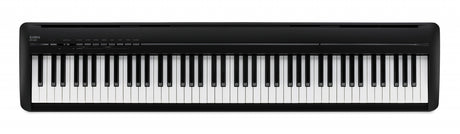
Searching for “Roland FP-30X vs Kawai ES-120” and want to compare current instruments? The Roland FP-40 and Kawai ES-120 have different keyboards, sound engines, speakers and connections. The Casio PX-S1100 is another option with its own feature set. This guide focuses on the direct FP-40 versus ES-120 choice and explains the older search term without inferring a model-successor relationship.
01Start by defining how you will use the piano
Both are portable 88-key digital pianos. The useful questions are how you play: will the instrument stay in one place? Will you mostly use built-in speakers or headphones? Do you want to stream audio, record or connect external speakers? Those questions connect official specifications with your actual setup. The Stage Pianos collection includes other portable models if you want to widen the comparison.
02Their keyboard actions use different designs
Roland lists PHA-4 Standard action with 88 keys and triple-sensor detection for the FP-40. Kawai lists Responsive Hammer Compact with 88 keys for the ES-120. The brand names do not measure which keyboard will suit every player. If action matters to you, play the same short passage on each: quiet notes, repeated notes and chords. That lets you compare your own response instead of drawing a universal conclusion from model terminology.
Kawai pairs the ES-120 with Harmonic Imaging and SK-EX and EX grand piano samples. Roland lists Piano Reality for the FP-40. These are each manufacturer’s technology names, not a direct sound ranking. Listen to the same passage at a similar volume. If you mostly use headphones, include the headphone experience instead of judging only the built-in speakers.
03Consider speakers, connections and portability
Roland lists two 12-watt speakers for the FP-40. Kawai specifies an integrated 20-watt stereo speaker system for the ES-120. These figures describe the equipment, not necessarily perceived volume or sound quality. Room, placement and listening level matter too. Both manufacturers list Bluetooth features; check whether you need MIDI, audio or both wirelessly, and which connections your other equipment requires.
Kawai lists the ES-120 at 12 kg. If you will move it often, weight, dimensions, a carrying case and a stand are practical considerations. The FP-40 may suit a different workflow through its connections and Piano Reality sound engine. Check the full manufacturer information for each version before planning accessories or external equipment.
04When the Casio PX-S1100 belongs in the comparison
The Casio PX-S1100 adds a third keyboard and sound configuration to consider. Casio lists Smart Scaled Hammer Action, AiR sound generation and maximum 192-note polyphony. Those details offer points to evaluate, but they do not automatically put it above or below the FP-40 and ES-120. First check whether its weight, connections and features suit where you play.
For a useful comparison, choose one or two pieces you know and play them on each instrument at a similar volume. Note whether keyboard, voices, speakers or connections make the practical difference. If you mainly play piano, extra rhythms or voices may matter less. If you use apps or play with a band, connections and outputs may matter more.
05Separate FP-30X searches from today’s model choice
FP-30X is a frequently searched historical designation and Roland still has an official product page for it. Since 1 September 2026, the current model is called FP-40, without an X. The manufacturer pages reviewed for this comparison do not establish an official successor relationship between the FP-30X and FP-40. Treat the search term as a starting point for a feature question, not proof that one model replaced the other.
This article answers a direct FP-40 versus ES-120 comparison. That is a different purpose from the Roland FP series overview, which covers entry through upper models. The ES-120 provides another keyboard and sound configuration; the right choice depends on your setup. Check the manufacturer details for your priorities and choose based on features you will actually use.
Compare the FP-40 and ES-120 by the keyboard, sounds, speakers and connections that matter to you. The Casio PX-S1100 adds a third configuration. FP-30X searches frame the question but do not prove an official successor relationship.
Frequently asked questions
Is the FP-40 the successor to the FP-30X?
How do the FP-40 and ES-120 keyboards differ?
How are their speakers different?
When should I compare the Casio PX-S1100 too?
Explore portable digital pianos
Compare their features and choose for your playing space and setup.
View the Roland FP-40View the Kawai ES-120View the Casio PX-S1100Browse Stage PianosPassende Produkte


Roland FP-40 BK Digital Piano – 88 Weighted Keys, Black