

When shopping for a singing bowl labelled 432 Hz or 528 Hz, the numbers can look like equivalent alternatives. They may describe different things: Meinl uses 432 Hz for the A4 tuning reference, while “Mi 528 Hz” names a note in a Solfeggio product. That distinction makes product specifications easier to read and helps you choose by construction and the sound you actually prefer. A frequency label does not prove a health benefit.
01First, what does the frequency label refer to?
Hertz measures cycles per second. For a tuned instrument, a number may identify the reference pitch used to align other notes. Meinl labels its white-frosted crystal bowls with an A4 reference of 432 Hz or 440 Hz. Its Solfeggio range also uses note-and-frequency product names, including “Mi 528 Hz.” Those labels are not automatically two equivalent tuning options for one bowl. Read the full specification: does it name a reference pitch, a note, an octave or a product series? The note and the hertz value belong together. When comparing bowls, also consider the material, diameter and the particular model’s sound. The number alone does not tell you how the bowl will sound in your room or whether you will enjoy its tone.
02What a 432 Hz crystal bowl label tells you
The MEINL Sonic Energy bowl listed in the shop is a 16-inch model identified with note F3 and a 432 Hz reference. Meinl describes its white-frosted series as high-purity quartz and lists bowls in different sizes and notes. The product information therefore covers material, size, note and series reference. It does not establish an emotional or physical effect. When tapped or rubbed, the specific bowl produces its own tone and overtones; whether you like that sound is a personal judgement. Use the product button to view this exact 16-inch bowl. A metal bowl belongs to a different construction family, so it is a separate comparison point rather than a direct frequency alternative. Listen to the individual instrument where possible, especially if the way it responds to a mallet matters to you.
03528 Hz as a product note, without a health claim
In its Solfeggio range, Meinl uses “Mi 528 Hz” as a note and product label. The official catalogue lists the separate SOLCSB8-528, an eight-inch bowl labelled Mi 528 Hz; the current maker page also lists a distinct 4.5-inch ESOLCSB528 with the same note. In both examples, 528 Hz is a note specification for that product, not a series’ A4 tuning reference. This does not establish claims about DNA, healing, sleep or bodily functions. For selection, use checkable details such as material and diameter, then listen to the sound for yourself.
04Choose by construction, sound and intended use
Start by deciding whether you want a crystal bowl or a metal bowl. Quartz bowls and hand-crafted bronze-alloy bowls use different materials and construction, so a single printed number is not enough to compare them. For the SB-U-400, Meinl states that it is made in India from a special bronze alloy. For the SB-E-2200, the maker lists a reinforced rim, a weight of 2,200 grams and a high initial tone followed by a deeper tone. Those details apply to that model rather than every singing bowl. If possible, listen to the exact bowl with its intended mallet. Notice the attack, overtones, volume and how long the sound carries in the room where you plan to play it. Choose the material and size that suit your preferences, rather than relying on a frequency label as a ranking.
Read a frequency in the context of the maker’s full product label. When choosing between crystal and metal, compare their construction and the particular sound you hear; the numbers do not replace listening.
Frequently asked questions
Does a 432 Hz singing bowl necessarily play a 432 Hz note?
What does Mi 528 Hz mean?
Do 432 Hz or 528 Hz prove a healing effect?
How can I tell which bowl I like?
Explore singing bowls
Compare the product details and choose the sound you prefer in person.
Browse all singing bowlsView the 16-inch crystal bowlView the SB-U-400Passende Produkte
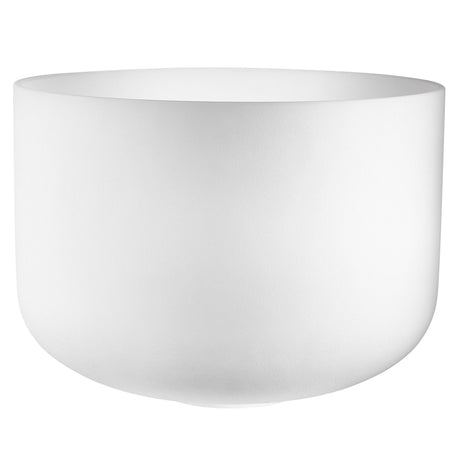
MEINL Sonic Energy crystal singing bowl white frosted – 40 cm, note F3, 432 Hz, heart chakra
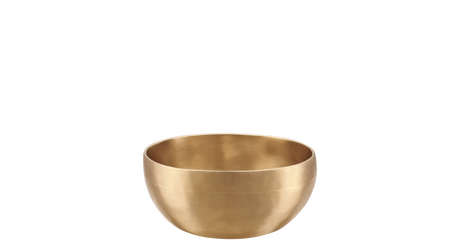
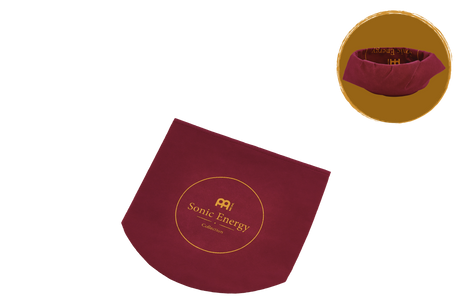
MEINL Sonic Energy SB-U-400 singing bowl – bronze alloy, 12 cm, handmade in India