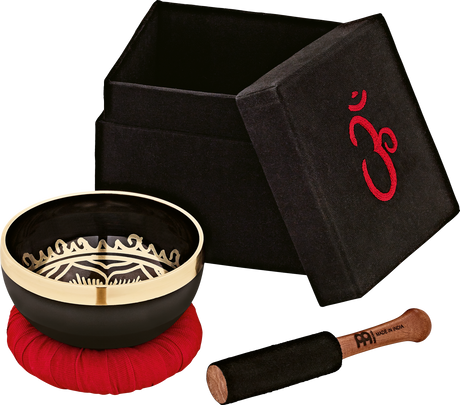
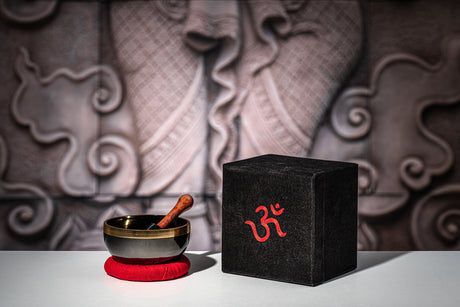
Playing a singing bowl sounds easier than it is at first: the difference between a dull thud and a full, swelling tone comes down to technique – how you strike, how you rub and how you hold the bowl.
This guide walks you through the two basic techniques, the right hold and the care basics. Your bowl will sound better from the start and stay that way for years.
01Striking: the soft, clear tone
Striking produces a single, unfolding tone. Hold the mallet loosely and strike the bowl on the side, just below the rim – not on top of the rim and not in the centre. Keep the mallet roughly parallel to the rim.
The stillness afterwards matters: let the tone ring out instead of striking again right away. A gentle strike gives a soft tone, a slightly firmer one a fuller tone – but never strike with force, as it harms both the sound and the metal. The right mallet depends on the size and character of your bowl: a mallet with a larger padded head gives a soft, round tone.


02Rim rubbing: the swelling, long tone
Rubbing makes the bowl sing – a sustained tone that slowly swells. For this you need a friction mallet, usually with a leather or silicone surface. Move it with steady, light pressure along the outer upper rim, all the way around, at an even speed.
This takes a little practice: too fast or too firm, and the tone breaks or rattles. Over time you'll find the pace at which the bowl keeps singing on its own. Tip: strike first, then move straight into rubbing – the tone gets going faster.

03Holding it right: so the bowl vibrates freely
A singing bowl only sounds full when its rim can vibrate freely. So rest it on your flat, open palm – not on your fingertips and not cupped from above. Keep fingers and palm stretched out so the rim touches nothing.
For larger or heavier bowls a cushion is the better choice: a ring cushion or felt pad supports the bowl while letting it vibrate freely. Never place it directly on a hard tabletop – this dampens the sound and can damage the bowl. If you're just starting out, a set with bowl, friction mallet and cushion brings everything together, matched.

04Care and cleaning: the basics
Singing bowls are easy to look after, but they need the right handling. To clean, a soft, dry or slightly damp cloth is enough to wipe away dust and fingerprints. Avoid scouring agents, harsh cleaners or metal polish – they attack the surface and can change the sound.
Store the bowl on a cushion or soft surface, never hard against hard and not stacked without protection, so no dents or scratches form. The mallet wants care too: keep the leather or felt head dry and clean, then it grips better when rubbing and the tone stays even. That way your bowl will be with you for many years.
| Do | Avoid |
|---|---|
| Soft, dry or slightly damp cloth | Scouring agents and harsh cleaners |
| Store on a cushion or soft surface | Placing on hard surfaces or stacking |
| Keep the mallet head dry and clean | Striking with force |
With the right technique and a little care, a singing bowl will be with you for many years. Strike, rub, let it vibrate freely – and keep it clean with a soft cloth.
Frequently asked questions
How do I play a singing bowl correctly?
What is the difference between striking and rubbing?
Which mallet or friction mallet do I need?
How do I clean a singing bowl?
Do I need a cushion for the bowl?
The right singing bowl and accessories
From a single bowl to a set with friction mallet and cushion – browse our selection.
View all singing bowlsStarter set with friction mallet and cushionPassende Produkte
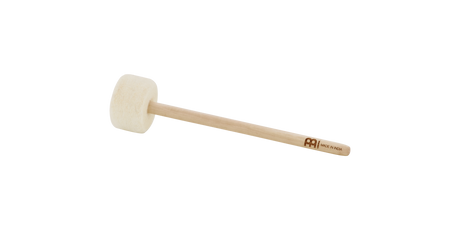
MEINL Sonic Energy Singing Bowl Mallet Big Head - 21cm (SB-M-LT-S)
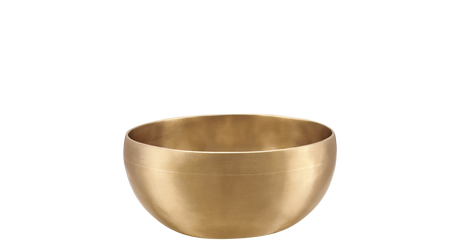


MEINL Sonic Energy Singing Bowl Reamer - 20.1cm (SB-RM-LE)